
YouTube Pre-Roll Ads are probably one of the most powerful, yet underutilised placements of Marketing/Advertising real-estate on the internet right now!
So let’s dive in and take a look at exactly what they are, and how you can start utilising this paid advertising strategy for your business today!
P.S If you’re looking for ways to organically market your business on YouTube, check out our video below:
What Are YouTube Pre Roll Ads?
YouTube Pre-Roll Ads (also known as in-stream video ads)are a form of video advertising contained within the Google Ads platform. In a nutshell, a pre-roll ad is a short video advert that plays when you click on a YouTube video before the main video starts playing (As long as the channel has monetisation enabled).
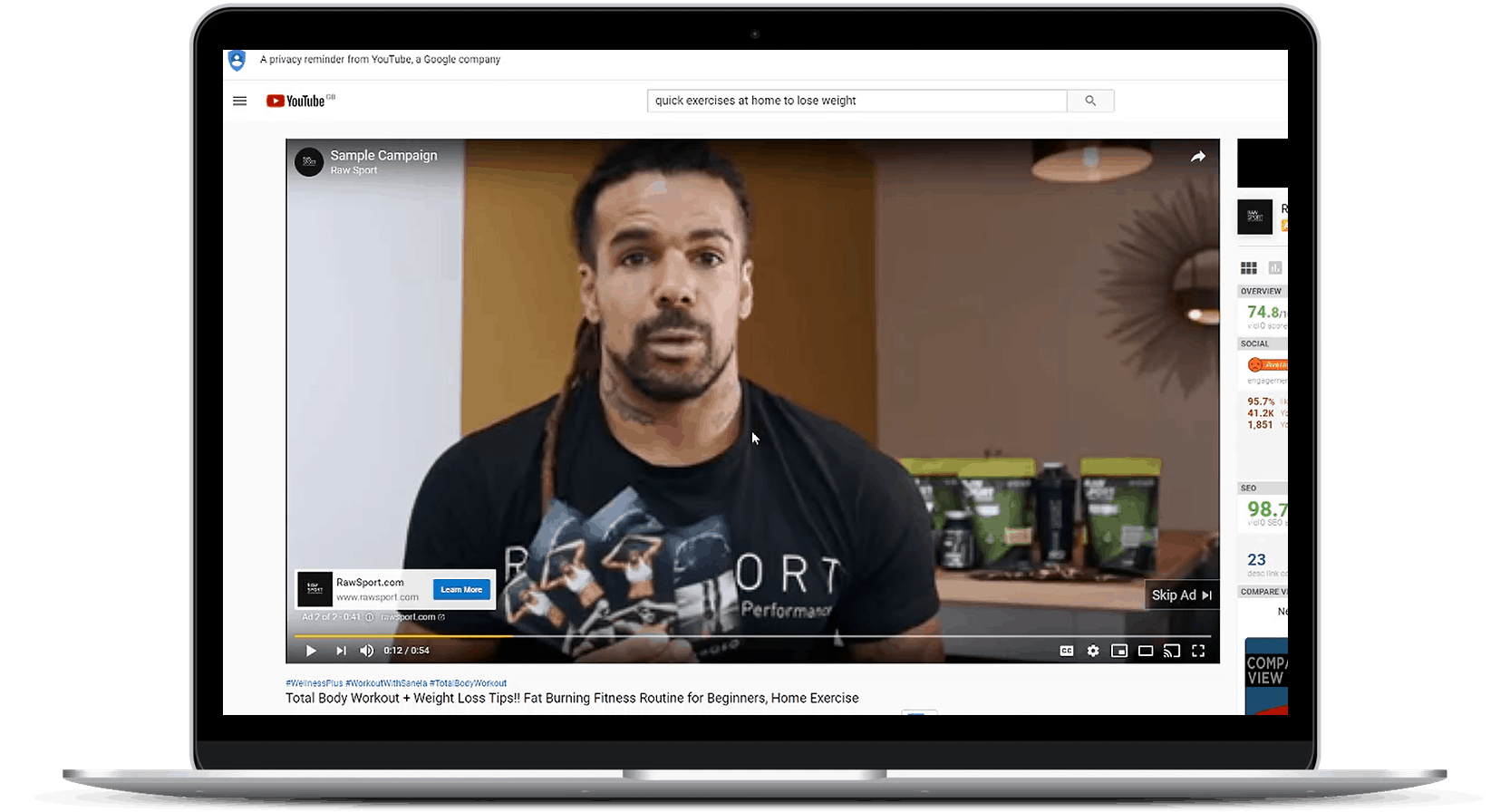
You can tell a YouTube Pre-Roll Ad by several key indicators:

- The 5 second countdown at the right-hand side of the video, after which point you’ll be able to skip the ad.
- The call to action button and advertiser details on the left-hand side of the video.
Why Use YouTube Pre Roll Advertising?
Now what makes this method of advertising so powerful you might be asking…
It really comes down to the incredible ability Google gives advertisers to target the right people at exactly the right time.
It’s also worth considering these five statistics:
- Video Advertising Trends: Video was the fastest growing form of ad format in 2012. (source: Insivia)
- Communication Effectiveness: Viewers retain 95% of a message when they watch it in a video compared to 10% when reading it in text. (source: Insivia)
- Buying Decision: 52 percent of consumers say that watching product videos makes them more confident in online purchase decisions. (source: Invodo)
- Decision Makers: 59% of senior executives prefer video over text. (source: Brainshark)
- Conversion Rates: Animated explainer videos increase conversion rates by 20%. (source: Unbounce)
Not only that, but YouTube is regarded as one of the most popular channels on the internet as seen by recent studies.
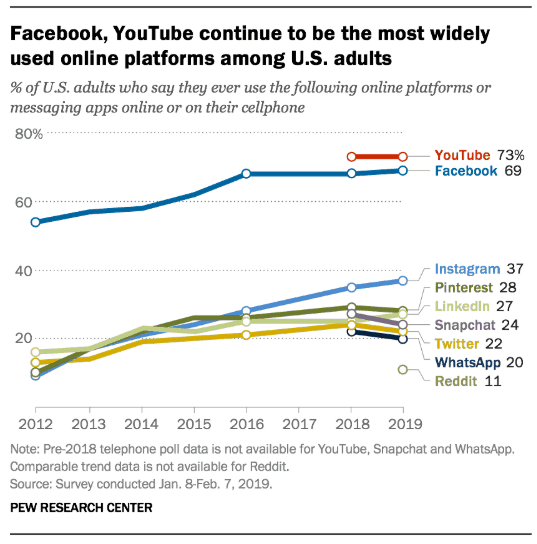
Not to mention, it’s also the second BIGGEST search engine on the internet, behind Google itself.
Want A Free Video Audit Of Your Website & Ad Campaigns?
Book your FREE digital review today and we’ll record you a personalised 10 minute video with feedback on your current website and ad campaigns. As well as practical suggestions to help skyrocket your leads and sales with LESS spend.
Different Types Of YouTube Video Ads
Whilst Google offers several different options for YouTube ad campaigns, there are really 3 main types of Pre-Roll Ads:
-
In-Stream skippable video ads: Users can skip the advert after 5 seconds. These are a pay-per-view model which means you pay when the viewer watches the entire ad or when they reach 30 seconds.
-
In-Stream non-skippable video ads: These ads are 15 to 20 seconds long. Non-skippable ads are on a pay-per-view model as well and are usually used by national advertisers.
-
Bumper ads: 6 seconds in length and non-skippable. Bumper ads are on a pay-per-1000-views model and are also usually used by national advertisers.
There are also others ways of advertising on YouTube such as discovery ads or banner advertising, but these technically aren’t classed as pre-roll.
Let’s take a look at an example of a pre-roll instream skippable ad below and how it actually works.
How Does A YouTube Pre Roll Or In-Stream Video Ad Work?
So let’s look at a few example and use-cases here.
Imagine for example you run a health and fitness course (think of how this could look for your industry/business) and you’re currently offering a free trial for new members with an upsell at the back-end.
With a YouTube pre-roll video ad, you have the ability to run ads on SPECIFIC videos on YouTube.
For example here, I can run my advert, talking about my free course to people ALREADY searching for “workouts for beginners” or “home workout program”
Or looking at the example below, this is a nutrition company targeting home-workout videos:
Pretty powerful stuff right!?
Now let’s look at another example.
Maybe I run a real estate company and we have some new homes available in London.
With a YouTube Pre-Roll Ad you also have the ability to target users based on their recent Google searches. So if somebody was browsing for new homes in London earlier, I could then run ads to that person on YouTube later (regardless of what videos they are watching) with an advert of our company. Maybe even a mini-tour around a new home with a call to action button on the video to “book an appointment”
Are you starting to see how powerful this can be?
So let’s take a look at how you can start utilising Pre-Roll Adverts for your business.
How To Set Up A YouTube Pre-Roll Video Ad Within Google Ads
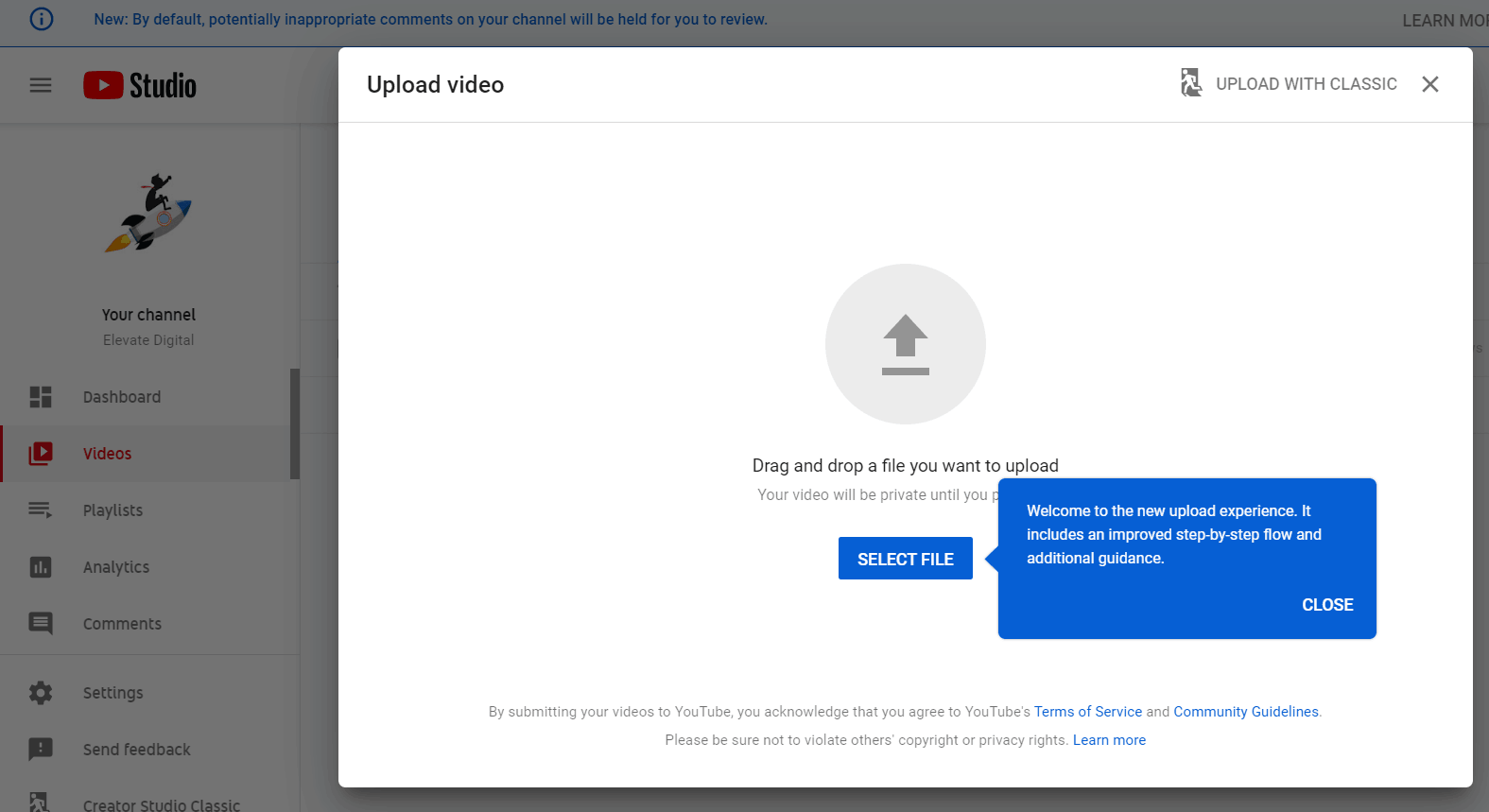
Step 1: Get Your Video Created & Uploaded To YouTube
So let’s jump into how you can start creating a YouTube Pre-Roll Advert for your business.
First things first, we’re going to need a great ad that can hook people within the first 5 seconds before they can click that skip button.
If you don’t already have a video and don’t have the budget to use a high-end video production agency, not to worry! There are some brilliant companies like AdZombies who will create awesome short adverts for YouTube that are designed to grab the viewers attention and get them to act!
Once you’ve got your new video, we’re simply going to upload the video we want to use to our YouTube account and save the video link for later in the process.
Step 2: Create A New Campaign In Google Ads
So this is where we’re going to begin creating the ad itself and choosing the targeting and landing page/offer you’re going to be driving people to.
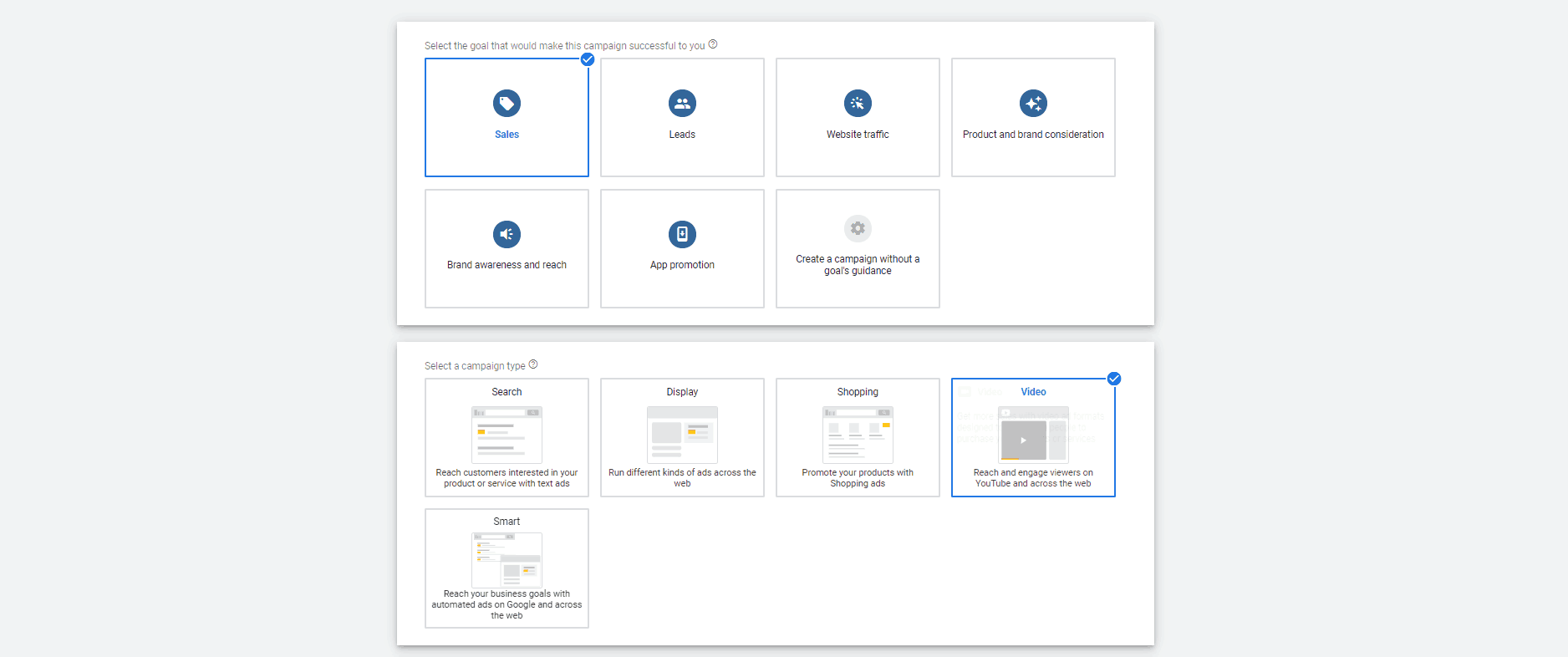
Firstly, we’re going to choose our goal, this will likely either be sales or leads depending whether you’re looking for sign-ups or purchases. For the purpose of this guide, we’re going to be setting up a campaign with the sales objective.
Next, you’ll need to select the campaign type which in the case of YouTube Pre-Roll Ads, is going to be “video”.
Once you’ve done this, you’ll need to set up your campaign strategy as with any Google Ads Campaign. This includes setting your campaign name, bidding strategy, and budget.
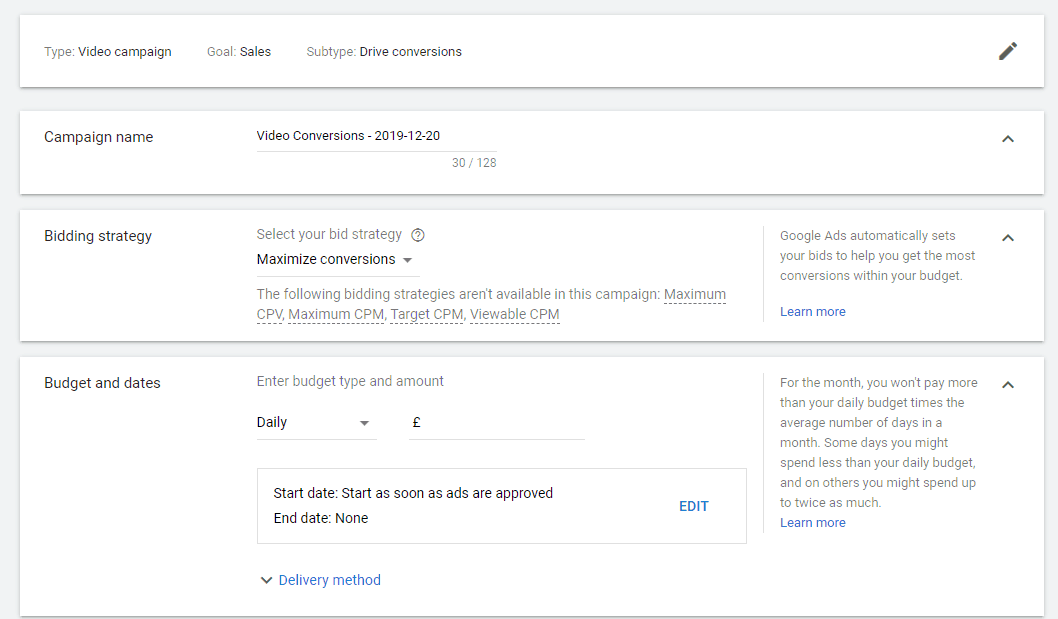
It’s worth noting here, that with this campaign type and objective, you’ll be given two bidding strategies, target CPA (cost-per-acquisition) or maximize conversions. If this is your first time running a campaign or you don’t already have a significant amount of data, I would avoid using target CPA as Google needs data for this to work effectively.

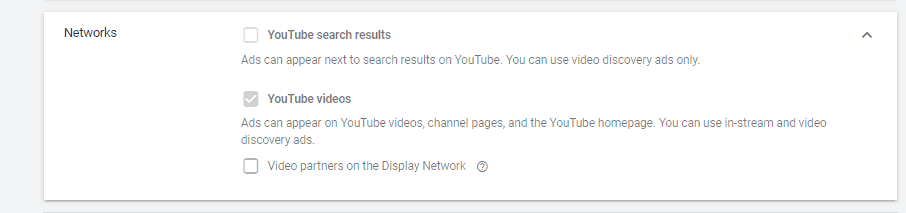
You’ll also be given the ability to choose which networks your ad shows on. Video partners on the display network will usually be ticked as standard. This feature allows Google to expand your reach by showing ads on their partner network, including mobile apps and others websites. It’s worth experimenting with this, but for the sake of this guide, I have switched it off.
Step 3: Set Up Your Targeting
Now comes the fun part!
This is where you’ll have the opportunity to set up your targeting to help you reach your ideal customer.
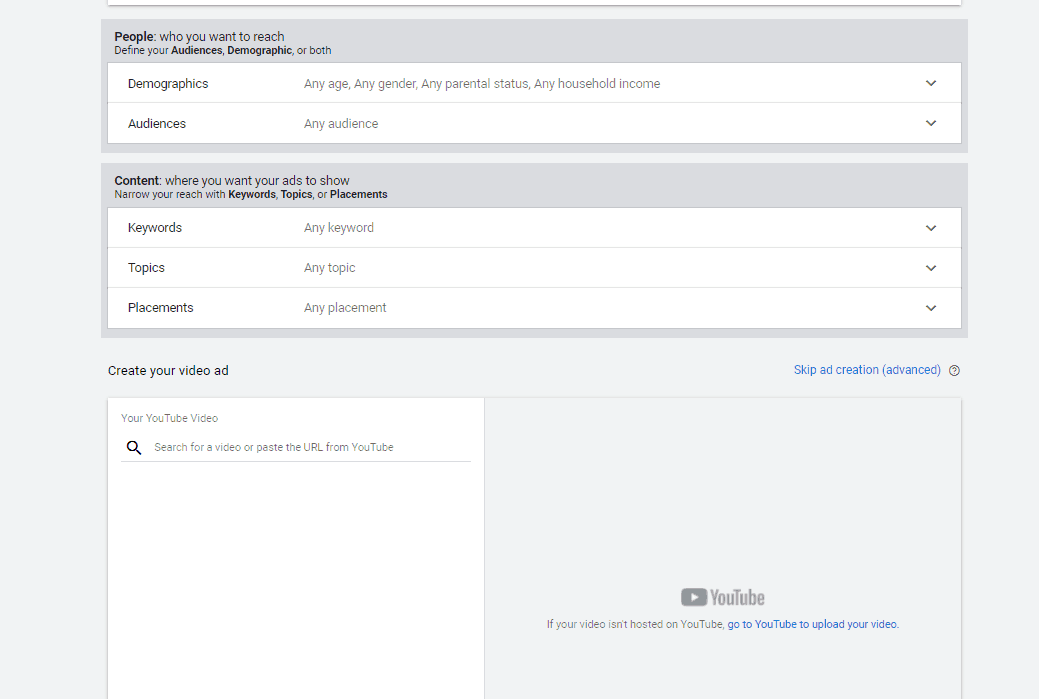
The first section will allow you to set up the demographics of your customer which is all fairly standard stuff. The Audiences tab on the other hand, will allow you to target certain Affinity Audiences Google put’s its users into.
For example, based on a users search behavior, Google may put someone in the affinity audience of being a business professional. It’s worth noting however, this isn’t always going to be 100% accurate and is purely based on recent search behavior.
The next thing the Audiences tab will allow you to do, is to reach any re-targeting (also known as remarketing) audiences that you’ve created. For example, this can be used to show ads to people who visited your website but didn’t buy or enquire.
Another example is of a re-targeting audience is that if you have a fairly active YouTube channel, you can actually use it to show ads specifically to subscribers or people who have viewed your videos within a certain time frame. This can help to build credibility and establish trust before making an offer.
Retargeting campaigns can be an extremely effective way at reducing your CPA (cost per acquisition) because you’re now specifically targeting people who have already been on your website, or engaged with your content and expressed an interest.
Pretty cool right!?
Step 4: Choose Where You Want Your Pre-Roll Ad To Show
Once you’ve set up your targeting preferences, you can then choose the content (videos) you want your ads to show over. Whilst you have the ability here to target certain keywords or topics, we’re going to be focusing on placements for the sake of this guide.
Using placements will allow you to target specific YouTube channels or videos to show your ads on. It’s worth doing some research here and going back to your customer avatar. This will help you pinpoint the videos they may be searching for or channels they may be subscribed to.
As in the earlier example, let’s take someone who is offering a free trial to their online exercise program for beginners. In this case we’d want to put placements on most-viewed videos within that space.
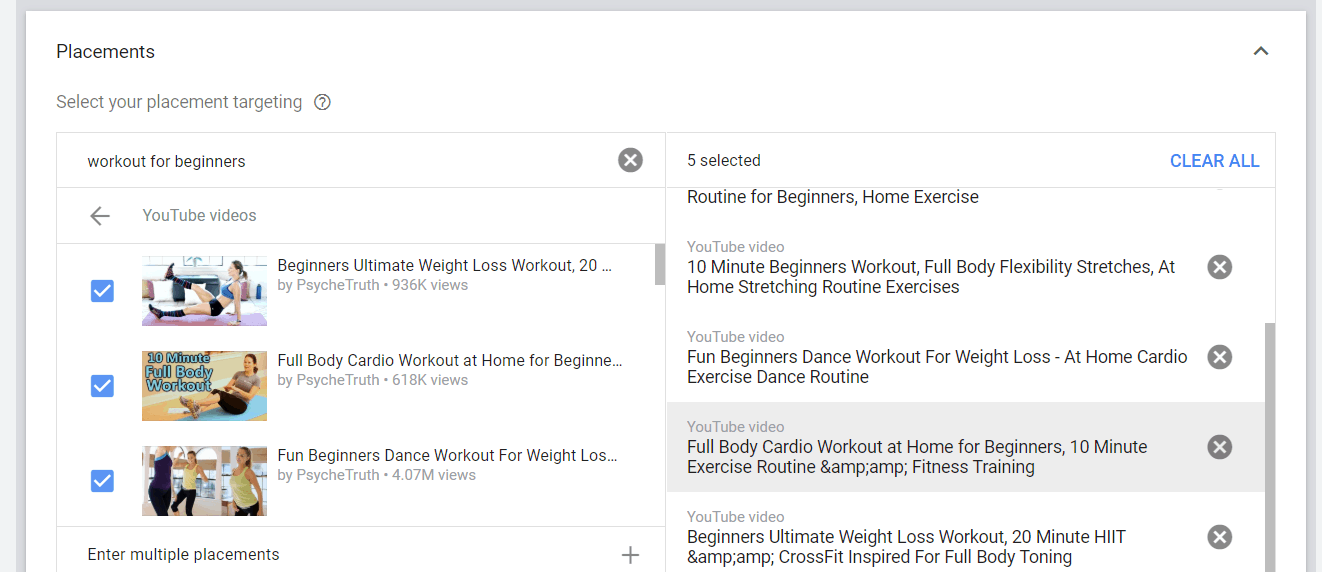
Step 5: Uploading & Creating Your Ad
Once you’ve selected the videos/channels you want to place you ad over, we need to tell Google the video we want to use by copying in the link.
You’ll then have the ability to preview how your ad will look and change the ad copy and landing page URL.
As with other ad campaigns, the final URL is the landing page you want your users to land on when they click on the ad. The display URL is simply what users will see on the ad. This will usually just be a shortened version of your full landing page URL.
You’ll then be able to set your call to action and headline as seen in the screenshot below.
It’s worth noting here that you’re limited to a small amount of characters so you’ll need to keep these short and snappy.
Bear in mind with this type of ad, your video should be doing most of the talking so the headline and call-to-action just re-enforces that message.
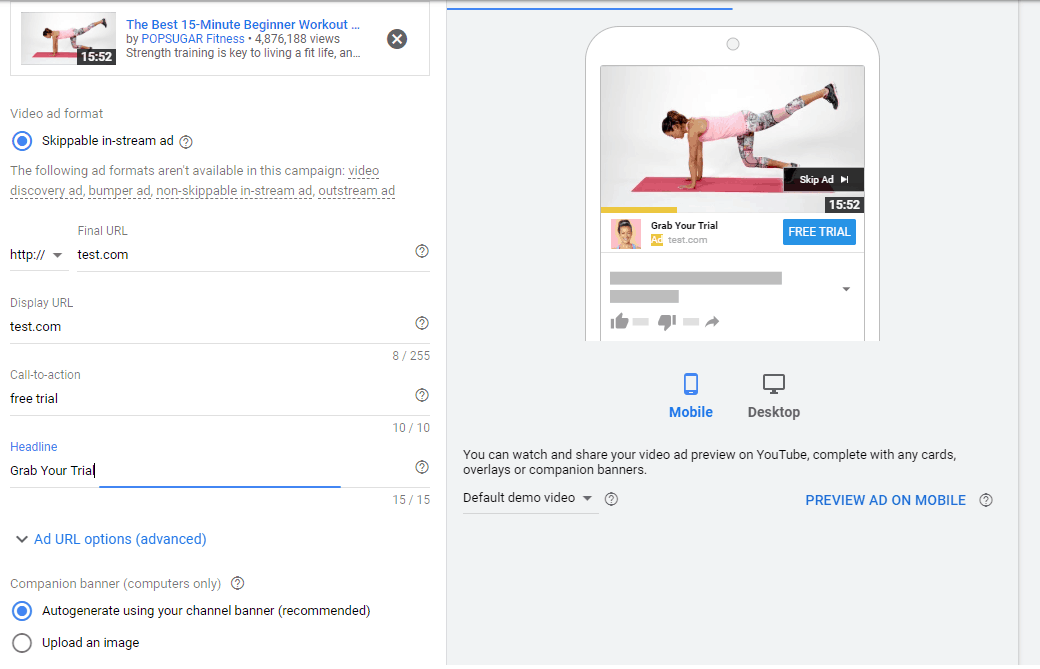
Once you’ve completed this final step, your ad will be whisked away for approval before then appearing on YouTube!
Best Practices For YouTube Pre Roll Video Ads
There are a few best practices to follow if you want to get the best results out of your YouTube Pre-Roll Ads. Here’s a few things to bear in mind when creating your ad:
Deliver your hook in the first five seconds
It probably comes as no surprise that around 93% of users will skip a YouTube ad. However, this is where knowing your audience can really help! If you can find a hook or pain point that will keep them watching, make sure you deliver it in the first 5 seconds, to keep people watching.
Keep in mind context
One of most common complaints about Pre-Roll Advertising is that the ad is longer than the video that it precedes. No-one wants to see a thirty second advertisement before a 10 second clip. Keep in mind the context of the viewer! If someone is about to watch a 15 minute video, there’s a good chance, they’re ready to engage and relatively free from distractions. This is ideally what we want!
Careful targeting
As we just covered, YouTube provides granular targeting for which types of audience your Pre-Roll ad appears in front of. The main frustration over Pre-Roll Advertising is often due to the fact that the offer has nothing to do with the needs or interests of the person who is forced to watch it.
Make it fun
When reviewing some of the top-performing Pre-Roll ads, a recurring element is humour. Viewers have an inbuilt resistance to pre-roll advertising because it delays them from watching the video that they have selected. If you can provide value by making them laugh then that audience is much more likely to respond favourably to the ad.
Build curiosity
Keeping the audience engaged with beyond the five second skip mark can be tough to say the least! If you can build curiosity into your ad in these first five seconds, you’ll increase the chances of people sticking around.
Pre-qualify viewers
It’s worth remembering that with this type of ad, you’re going to be paying when users watch more than 30 seconds of your ad. For this reason, you want to make sure that it’s clear from the outset what you’re actually offering, or at least who it applies to. Otherwise, too much curiosity might actually backfire on you here!
Hopefully this guide has given you a better insight and understanding of YouTube Pre-Roll Ads and how they can benefit your businesses growth!
As always though, every business is unique and what works for some, won’t always work for others! If you’d like any help creating a growth marketing strategy specifically for your business, be sure to book your Free Digital Review today!

He is a self-confessed Digital Marketing geek and is obsessed with consumer psychology and human behaviour.
In his spare time, Tom is a big advocate for meditation and self-development. He's also an avid gamer and lover of gadgets 🎮📱
- Highly-Effective DTC Marketing Strategies & Examples - February 28, 2024
- How To Set Paid Media Marketing Budget - October 16, 2023
- The Ultimate Guide To A/B Testing - September 23, 2023