
Most businesses have some form of blog on their website, but very few are successfully using them to generate leads and sales.
When done right, your company blog can be one of the most powerful lead generation systems for your business.
But it might take unlearning some bad habits along the way…
Here’s 5 proven ways to significantly increase the amount of leads and sales you generate from your blog posts.
1. Don’t make your blog post ALL about you
This may sound counterinutive but stick with me here…
You have to remember, when people come to your blog or article, they’re not looking to be sold to.
They have a particular pain or problem they’re looking to solve.
We see so many business publishing blog posts like ” 10 reasons our company is the best”
I hate to say it…but nobody cares what you think, they care about their own problems.
Don’t tell them you can solve their problems…show them you can.
Once you’ve built up this initial trust and credibility, people will be much more likely to engage with what you have to offer.
The other benefit to making your blog posts focused on a specific problem is that you’ll start ranking much better organically from an SEO perspective. By creating content around the pains and problems of your audience, you allow people to discover you organically.
2. Don’t sell on your blog post
*WHAT!? Isn’t this blog post about generating more sales from blog posts?*

Yep, but here’s the thing…
Like we mentioned in point 1, people don’t want to be sold to – at least not yet…
Think of your blog posts like meeting a potential date for the first time.
Chances are you wouldn’t just go straight in and propose marriage!
Once you’ve delivered value, you’ll want to get their number (or email) to follow up and ask them back on a 2nd date.
Otherwise, there’s a good chance you’ll never see them again.
Maybe you’re already doing this by asking people to sign up to your newsletter.
But as you’ve probably noticed, the idea of signing up to “another” newsletter is about as exciting as watching paint dry.
In step 4 I’ll be covering an extremely underutilised method to start pulling in more leads from your blog than you know what to do with…
3. Target search queries that have commercial/buyer intent
When you’re creating a content strategy for your blog, it’s essential to do your research!
You’ll want to look into what kind of things your potential customers are searching for. A great resource for this is AnswerThePublic.
As you come up with ideas, think about the intent behind each search term and decide if it fits with your product/service offering.
For example, if you’re a restaurant, you probably wouldn’t want to create a blog titled
“Best meals to cook from home”
However, if you’re a food author and sell a recipe book, this could be a great search query to target as there is a likely chance to reader will want what you’re offering.
Think about the search terms that signal somebody could be in the market for what you offer and create your blog around that.
This will help to significantly increase the revenue and returns generated from your blog and SEO strategy.
4. Use a “content upgrade” on your blog post to generate leads
Offering a lead magnet is a great way to generate leads for your business.
However, with blogs we can go one step further and offer a content upgrade.
In theory a content upgrade is the same thing as a lead magnet but it serves more as an extension of the blog post you’re offering to make it truly relevent and a “no-brainer” for the reader.
Let’s say for example you run a hair salon and had a blog on “3 Tips To Dye Your Hair”
A content upgrade could be something like “The Ultimate Guide To Dying Your Hair Without Damaging It”
Here’s an example from a blog we published on how to increase email open rates for beginners a while ago.
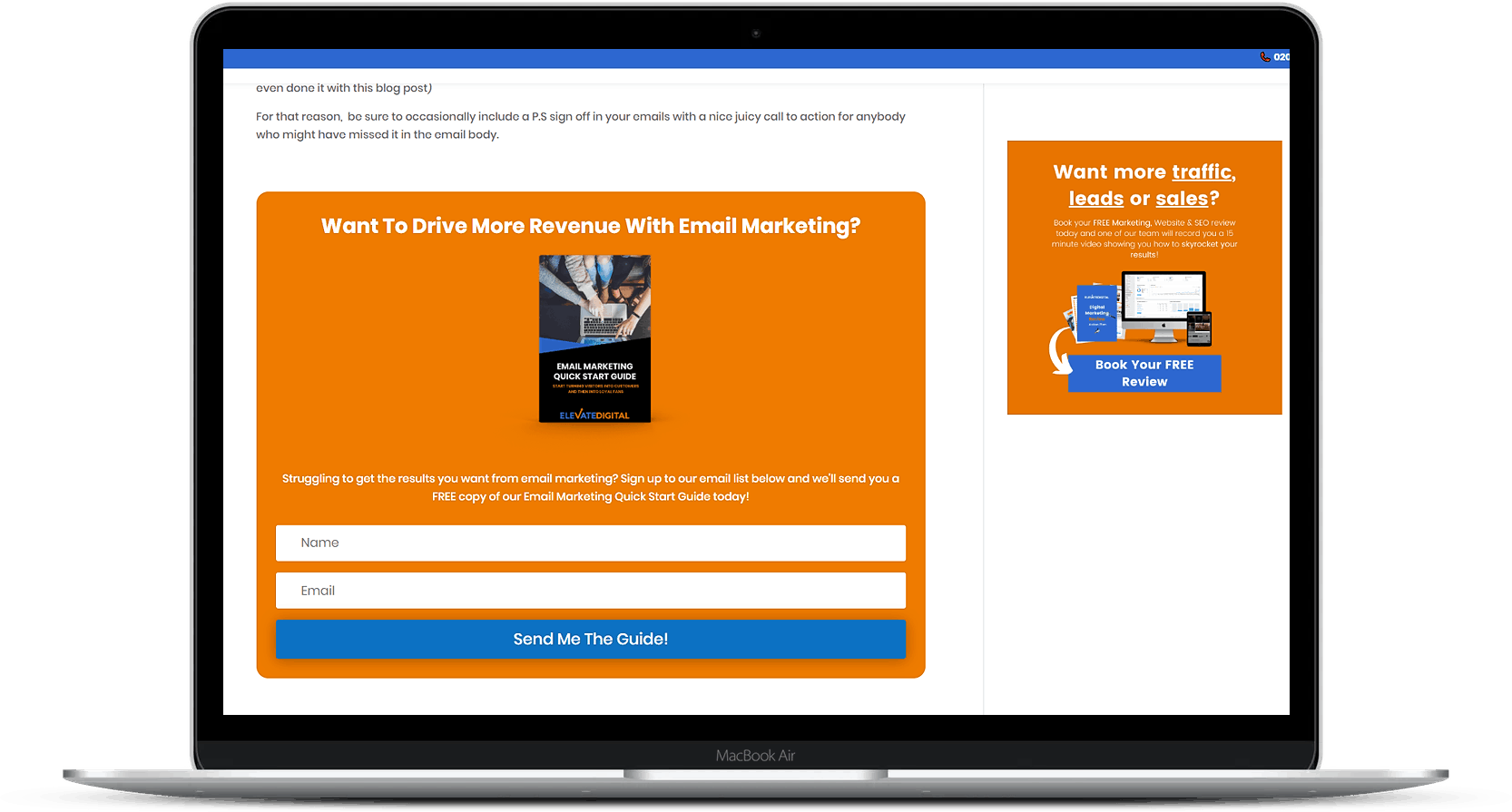
Get to the root of what you’re reader is probably looking to accomplish from reading you’re blog.
In our case, we know that if somebody is looking to increase their email open and click through rate, their ultimate end goal is likely to make more sales.
It’s effectively about offering the reader a logical next step that is contextual to the content they’re reading.
So instead of just offering a blank one-size fits all lead magnet.
Content upgrades can significantly increase the conversion rates for your blog posts and also give much better insights into your customers.
So when the time comes to follow up with them, you know exactly what they want, without having to guess; thus increasing your chances of converting them to a sale.
This isn’t to say you need to create a content upgrade for each one of your blogs, but if you have a few blogs that generate high traffic for your website, consider creating a content upgrade for these to really make the most of this traffic.
Want personalised advice on your search engine marketing and blog strategy?
Book your FREE digital review today and we’ll record you a 10 minute video looking at your current strategy and suggest some ways you could significantly increase your results!
5. Keep you blog post clean and without distractions
Once you have all of the above elements in place, you’ll want to make sure your blog posts are clean, engaging and free from distractions
Unless, you’re a media publication whose sole revenue comes from third party ads, avoid using things like Google AdSense as this can create a poor user experience.
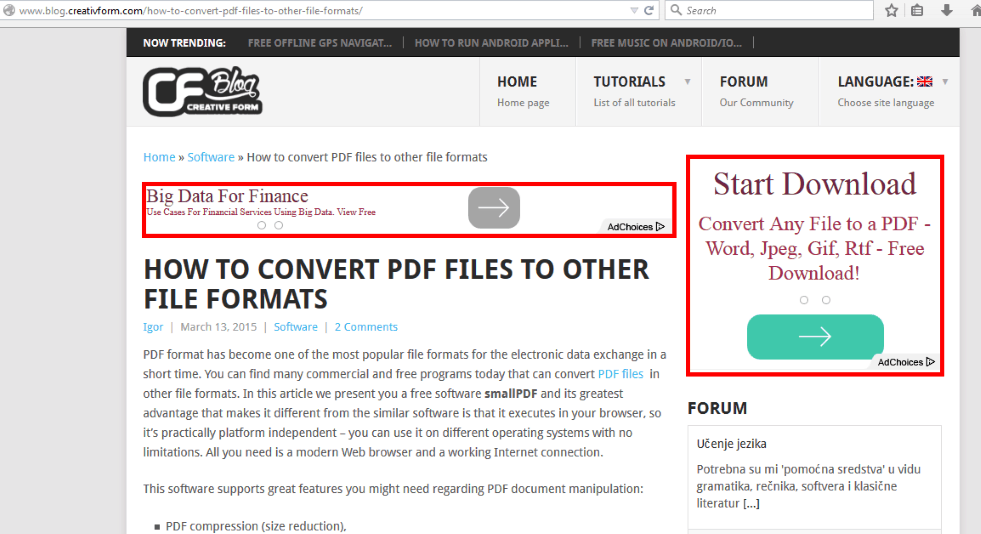
There’s nothing wrong with having relevent images, videos and call to actions in a blog.
In fact, they can help to make the blog post much more fun and engaging. Just make sure it’s relevent to the post or topic in question.
Now it’s your turn to create your own lead generating business blog
If you follow these steps persistently whilst always keeping your customer front of mind; you’ll be well on your way to turning your businesses blog into a lead generation machine.
And as always, if you want personalised suggestions and feedback on how to generate more traffic leads and sales from your website, be sure to book your FREE Digital Review today.

He is a self-confessed Digital Marketing geek and is obsessed with consumer psychology and human behaviour.
In his spare time, Tom is a big advocate for meditation and self-development. He's also an avid gamer and lover of gadgets 🎮📱
- Highly-Effective DTC Marketing Strategies & Examples - February 28, 2024
- How To Set Paid Media Marketing Budget - October 16, 2023
- The Ultimate Guide To A/B Testing - September 23, 2023