
There’s no denying that the more your potential customers trust you; the more likely they are to buy from you.
But how do you build trust with your customers and potential buyers in a predominantly digital world?
Especially when so many businesses still try desperately to play their cards close the their chest…

Whilst the digital age we live in has opened up huge opportunities for brands.
It has also allowed illegitimate businesses to run scams or for brands to pretend like they’re something they’re not.
Luckily, it’s also easier than ever for these businesses to be found out with things like online reviews, open forums and social media platforms.
But all in all, this hasn’t done much good when it comes to combating skepticism…
With this in mind, it’s not really any surprise to see consumer trust is declining year on year.
In fact, a study by BrandAsset Valulator showed that it had dropped from 44% in 2001, down to 18% in 2017!
It’s a shame then for the quality, customer-focused businesses out there to often be tarnished with the same brush!
That’s why we’ve put together 8 ways that you can build rapid trust with your potential customers and stand out in a sea of sharks.
1. Don’t ONLY Focus On Your Product (Yes, Even in Your Marketing…)
This is one of the biggest mistakes I see businesses making when it comes to creating content.
ALL they do is promote the product/services or produce blog posts that look like this:
“5 Reasons We’re The Best”
Guess what…
Nobody cares!
I don’t know about you but whenever I see a post like that my skepticism radar goes crazy!
Remember, trust isn’t built by bragging…
It’s built by showing that you actually care and have someone else’s interests in mind, not just your own!
When it comes to creating content online or as part of your Digital Marketing Strategy. Think about your target audience, and some of the problems and concerns they have.
Then create content that genuinely helps them to address these problems.
There’s nothing wrong with promoting your product occasionally but if you want to stand out and build trust. Be sure to predominantly lead with value!
2. Create An Omni-Channel Digital Marketing Approach
Omnichannel marketing is ultimately about creating consistent and connected brand presence across multiple channels
This helps to build up credibility and trust over time for several reasons:
- People begin to recognise your face or your brand name/logo
- The congruence in messaging helps build trust as people know what they’re going to get
- You start to develop credibility as people see your brand name wherever they go
A good way of doing this can be through re-marketing campaigns. This is done by setting up a tracking pixel on your website and then running ads to website visitors across multiple different platforms. You can learn more about re-marketing campaigns on our Ultimate Guide To PPC article.

3. Always Keep Your Customer Avatar & Their Desired Goal In Mind
It’s essential that your prospective customers feel understood in order for them to trust you.
The best way of doing this is creating a customer avatar and getting deep into the psyche of your customer.
You can then use this as a point of reference for any content being produced.
It can also be extremely helpful to pin a printed copy of your customer avatar up in your office or on your desk. This can help to remind of who you’re actually speaking to.
It might sound trivial, but you’ll be amazed at the difference this can make.
If you already have customers, be sure to regularly speak to them and ask questions.
Things change over time so don’t ever just assume why people buy from you! They might just surprise you…
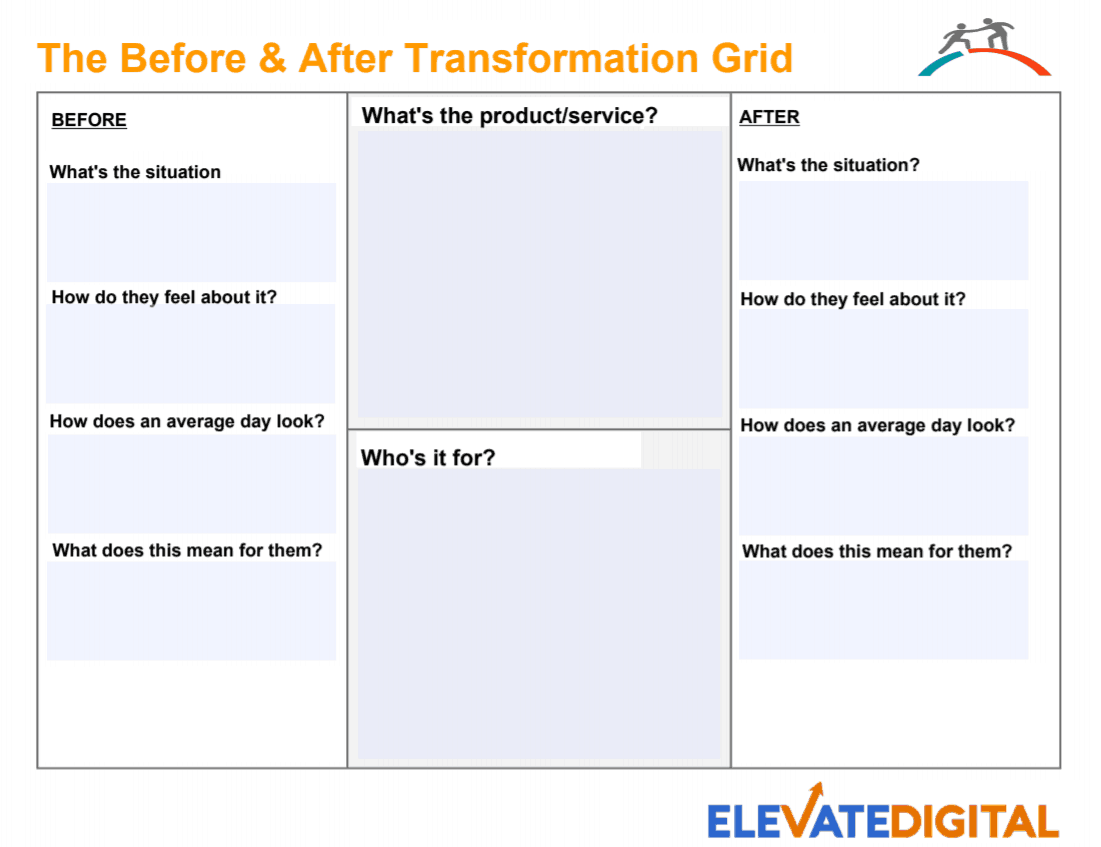
Another great exercise is the Before & After Customer Transformation Grid. This helps you to begin thinking about your customer’s desired end goal and where they are now; which in turn will help you to demonstrate understanding and compassion
4. Learn To Jab (In The Words Of GaryVee)
If you follow GaryVee, you’re no doubt familiar with the term “Jabbing” which comes from his book Jab, Jab, Jab, Right Hook.
In a nutshell, “jabbing” is the act of giving something, for free, without expectation, just because you can.
The “right hook” on the other hand, is the ASK.
This is when you ask for the business…but note the “jabs” always come first.

In other words, ALWAYS lead with value upfront.
A good “jab” might come in the form of a comment on somebody’s post who is asking for help. But instead of saying “come buy our product”. You simply answer their question in as much detail as you possibly can.
This approach can RADICALLY help to build trust as it shows you actually care and aren’t just trying to sell something.
It also follows Dr Robert Cialdini’s 6 Principles Of Persuasion; one of which is reciprocity.
When you do a favor for someone with ZERO expectation of anything in return, they are far more likely to want to reciprocate.
Once you’ve “jabbed” a few times and you’ve started to build trust and credibility. You then earn the right to ask for their business.
The crazy thing about this method though, is that if you truly master the art of “jabbing”; you often won’t even need to ask, as people will be ASKING to do business with you!!
5. Be HUMAN & Remember, People Buy From People
This could honestly be another article in itself!
The important of showing your human side can’t be understated.
As much as we like to think we a rational beings making logical decisions. Much of are decision making is influenced on an emotional level.
This can often mean getting vulnerable and real with people.
It can mean being authentic when others are trying to simply “fit in”
And sometimes even acknowledging the fact that you’re not perfect!
According to the Edelman Trust Barometer, nearly 2 out of every 3 consumers say that they trust influencer messages about a brand more than a company’s advertising about their own brand.
This doesn’t mean you need to go out and find influencers to market your brand.
But it does mean you have a responsibility to let potential customers get to know the people behind the brand.
6. Play To A Bigger Purpose & Make Tough Choices
Best-Selling Author Simon Sinek often talks about the “WHY” within an organisation, and what he calls “The Golden Circle Of Communication”.
This circle represents how some of the biggest brands in the world today communicate primarily from their WHY to build trust and respect from their audience.

This isn’t just speculation though…
The 2019 Edelman Brand Trust Survey showed that consumers ranked brand trust as one of the top factors they consider when making a purchase; even over quality and value!
Especially when it comes to what the business stands for…
A whopping 81% percent of survey respondents said that they “must be able to trust the brand to do what is right.”
This can often involve taking a stand for something instead of simply sitting on the fence. Naturally though, this will polarise your audience and result in some people disagreeing with you.
As such a lot of businesses avoid this as they’d rather be liked by everyone.
The problem is, when you try to be merely “liked” by everyone, people usually remain indifferent.
Ultimately, the brands who take a stand, are the one’s who command trust and attention.
7. Publicly Respond To Feedback & Own Your Mistakes
If you’ve been in business for any length of time, you’ll know that you can’t please everyone.
Things occasionally go wrong, staff might call in sick, or you may have just made a genuine mistake on something.
The problem is, with social media and a huge number of review platforms out there, this can very quickly go public!
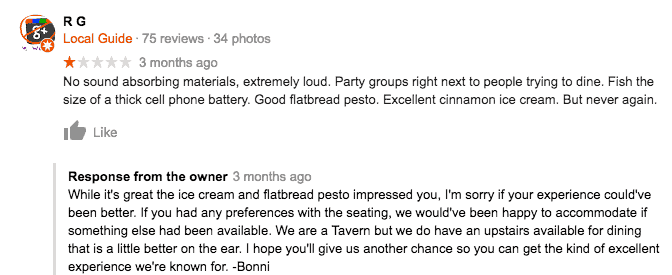
To make it worse, we see so many businesses who respond to all the positive reviews but ignore the negative reviews!
Please DON’T do this…
The reviews aren’t going to go away and by ignoring it, you’re only showing potential customers that you don’t want to (or know how to) deal with problems.
When bad reviews happen, it’s essential to own up to it!
This can actually in-turn help to build trust instead of damaging it
8. Collaborate With Others & Form Influencer Partnerships
Strategic partnerships and collaborations can be an incredibly powerful way to build trust and credibility with your audience.
That’s because they allow you to leverage the trust an audience already has with the other brand or person.
A good example of this might be to find a strategic partner who is aligned with your mission but in a different line of business.
It could also involve doing regular podcast appearances, interviews or guest blogs.
It might even come in the form of interviewing one of your competitors and sharing ideas that could genuinely benefit the end-customer.
It might sound crazy but it’s a win-win scenario as it will help to build trust and respect for BOTH brands in the eyes of the consumer.
Too many businesses view things from a scarcity mindset and turn away from opportunities like this.
But when you realise there is more than enough business for everyone out there, this can open up some incredible doors!
Want personalised advice on your marketing?
Book your FREE digital review today and we’ll record you a 10 minute video looking at your current strategy and suggest some ways you could significantly increase your results!

He is a self-confessed Digital Marketing geek and is obsessed with consumer psychology and human behaviour.
In his spare time, Tom is a big advocate for meditation and self-development. He's also an avid gamer and lover of gadgets 🎮📱
- Highly-Effective DTC Marketing Strategies & Examples - February 28, 2024
- How To Set Paid Media Marketing Budget - October 16, 2023
- The Ultimate Guide To A/B Testing - September 23, 2023